A Perspective from Our Executive Director
Like many parents, I never imagined becoming an expert in special education law, healthcare systems, transition planning, or disability advocacy. Yet over the last twenty years, as a special educator, as a father, and through my work alongside thousands of Arizona families at Encircle Families (formerly Raising Special Kids), I have learned that disability does not define a person’s worth or potential. Expectations matter. Inclusion matters. Belonging matters.
That is why I am deeply concerned by the federal government’s decision to move the Office of Special Education and Rehabilitative Services (OSERS) from the U.S. Department of Education to the Department of Health and Human Services.
While the long-term implications of this move remain unclear, the direction itself concerns me because it represents more than a bureaucratic reorganization. It reflects a philosophy. One that risks moving our country away from viewing people with disabilities as students, neighbors, workers, friends, family members, and citizens, and back toward viewing them primarily through a medical lens.
Children with Disabilities Are Students First
Special education is not healthcare.
Healthcare is essential, and many children with disabilities rely on complex medical and behavioral supports. But the purpose of special education is fundamentally different. It exists to provide access to learning, promote independence, support self-determination, and prepare young people for meaningful lives in their communities.
The Individuals with Disabilities Education Act (IDEA) is not a medical program. It is a civil rights law. It embodies a profound principle: children with disabilities belong in schools and classrooms alongside their peers and deserve the opportunity to learn, grow, and contribute to society.
For nearly fifty years, the Department of Education has served as the home for that vision.
Moving OSERS to the Department of Health and Human Services risks changing how we think about disability itself. Healthcare systems understandably focus on diagnosis, treatment, and managing conditions. Education focuses on potential, achievement, and participation. These perspectives complement one another, but they are not interchangeable.
Children with disabilities are not patients who happen to attend school. They are students who may happen to need healthcare supports.
We Know the Current System Is Imperfect
I want to be clear: this concern should not be interpreted as a defense of the status quo.
Families raising children with disabilities know all too well that special education and IDEA are far from perfect. I know this both professionally and personally.
Parents struggle to navigate complex systems. Schools and families sometimes find themselves in conflict. Services can vary widely from community to community. Too many families experience frustration, confusion, and exhaustion trying to secure the support their children need.
Those realities deserve honest acknowledgment.
But imperfections in the system should lead us to strengthen and improve the educational framework, not to move away from it.
The answer to a difficult IEP process is not less emphasis on education. The answer to inequities is not to redefine disability primarily as a healthcare issue.
Better Coordination Is a Worthy Goal
Supporters of the move make an important point that deserves recognition.
Children with disabilities often depend upon both educational and healthcare systems, and schools increasingly serve as partners in addressing physical, behavioral, and mental health needs. Families routinely navigate multiple agencies, and those systems do not always work together as effectively as they should.
Improved coordination between education and healthcare would be welcome. Families deserve systems that communicate, collaborate, and reduce unnecessary burdens.
But coordination does not require relocation.
Education and healthcare are partners. One should support the other. Yet they exist for different purposes, and special education belongs within an educational framework grounded in rights, access, and opportunity.
A Step Backward
For much of our nation’s history, people with disabilities were viewed primarily through medical and charitable frameworks. Decisions were often made for them rather than with them. Segregated settings and institutional approaches reflected assumptions that people with disabilities were fundamentally separate from society.
Families, self-advocates, and disability rights leaders spent decades challenging those assumptions.
Through IDEA, Section 504, the Americans with Disabilities Act, and countless acts of advocacy, our country embraced a different vision. A vision rooted in inclusion, high expectations, self-determination, and community participation.
Institutionalization is not merely about buildings. It is a mindset. A belief that people with disabilities are better managed than included.
That is why the symbolism of this move matters.
Even if unintended, placing special education under a health agency risks reinforcing a medical model of disability. It raises concerns that disability policy may increasingly be viewed through a healthcare framework rather than one grounded in rights, belonging, and participation. It risks a return to ways of thinking that have historically separated people with disabilities from their communities.
For half a century, disability advocates, self-advocates, families, and policymakers have worked to move our nation away from systems that viewed people with disabilities primarily as patients to be managed and toward a vision of people with disabilities as students, neighbors, workers, friends, family members, and citizens. It is difficult to view the transfer of OSERS from the Department of Education to the Department of Health and Human Services as a step in that direction.
Schools Matter Because Belonging Matters
Schools are among the first communities in which children learn what belonging means. Inclusive classrooms are not merely educational settings; they are places where friendships are formed, expectations are shaped, and communities are built.
In Arizona, approximately 90% of the state’s 200,000 students with disabilities are served through IDEA in public schools. For these children and families, education is not simply a service delivery system. It is where children learn alongside their peers, where communities learn that differences enrich us all, and where society begins to realize the promise that every person has value and belongs.
Keeping special education rooted within the Department of Education reflects the understanding that disability is fundamentally about participation in society, not merely the provision of services.
The Vision We Are Pursuing
At Encircle Families, our vision is simple and ambitious:
Every person is valued and included in society.
As Executive Director, I have the privilege of witnessing that vision come to life every day. I see it in parents advocating for their children. I see it in schools striving to build more inclusive communities. I see it in young adults with disabilities finding employment, pursuing higher education, building relationships, and contributing their gifts to the world.
And I see it in my own son.
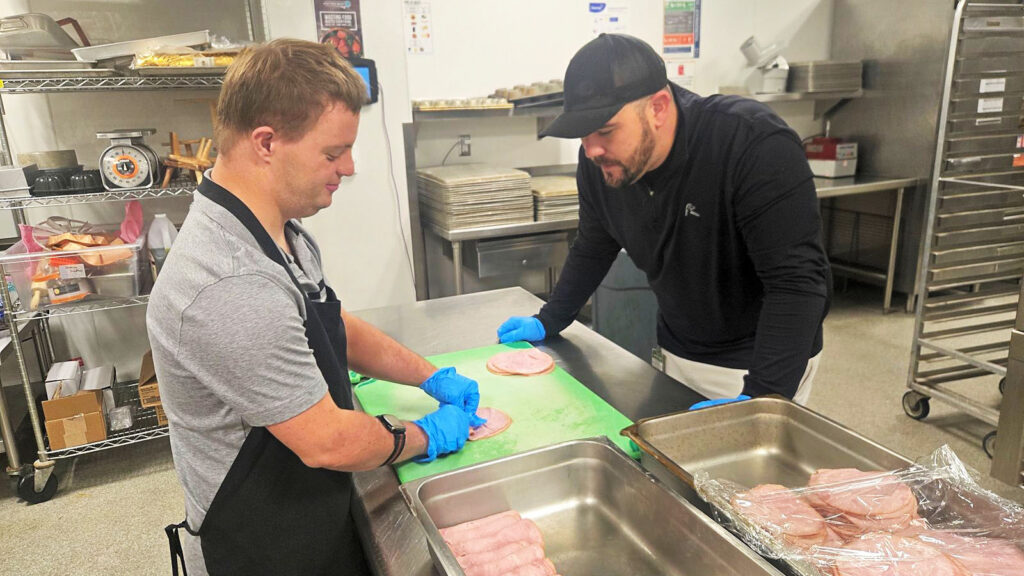
At nineteen years old, he is not simply a diagnosis. He is not a collection of deficits to be managed. He is a son. He is a friend. He is a member of our family. He is a young man with strengths, preferences, dreams, and inherent dignity. Like every person, he deserves to be valued and included.
That is why, in my view, moving OSERS from the Department of Education to the Department of Health and Human Services moves people with disabilities and their families further, not closer, to the realization of that vision.
People with disabilities are not problems to be solved. They are sons and daughters, brothers and sisters, friends and neighbors. They are classmates, coworkers, and citizens. They belong, not on the margins of society, but at its heart.
For nearly fifty years, our nation has been moving toward that vision. Sometimes imperfectly. Often unevenly. But always with the understanding that people with disabilities belong in our communities and in our common life.
Because the measure of a society is not how well it manages disability. It is how fully it embraces the humanity, dignity, and belonging of every person.