A Perspective from Our Executive Director
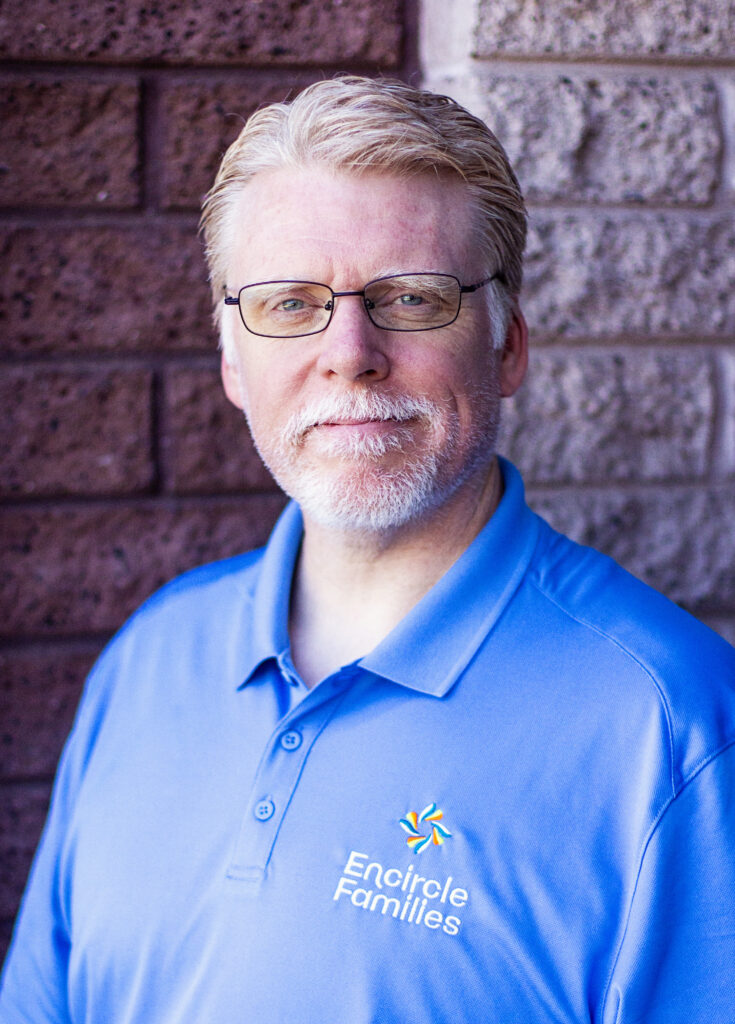
I know families of children with disabilities. I am one, and I have spent much of my career working alongside them.
If you ask us what we think, we will tell you. We will tell you what is working and what isn’t. We will tell you about the IEP meeting that changed everything for our child and the one that left us feeling defeated. We will tell you about the services we waited months to receive, the provider we cannot find, and the systems we have learned to navigate because we had no other choice. We will also tell you that the systems intended to support people with disabilities are far from perfect.
Listening to families means more than asking us what’s wrong. It means understanding what we are actually saying. Our frustration with imperfect systems should never be mistaken for a willingness to abandon the principles those systems were created to protect.
Earlier this summer, I wrote about my concern with the federal government’s decision to move functions of the Office of Special Education and Rehabilitative Services from the U.S. Department of Education toward the Department of Health and Human Services. At the time, I saw it as a troubling signal about how our federal government views disability.
Two months later, I am seeing more signals. Collectively, they are causing me to ask a much bigger question about the direction we are heading.
Different Actions, One Direction
I want to acknowledge something up front. There are reasonable arguments for some of these changes when you look at them individually.
There are potential benefits to better coordination between education, healthcare and human services. There is a reasonable argument for placing greater civil rights enforcement responsibility with the Department of Justice. And reasonable people can disagree about the interpretation of federal laws and regulations.
But we cannot look at public policy one decision at a time. Sometimes we have to step back and ask where all of those decisions are taking us.
Special education functions are moving away from the Department of Education and toward Health and Human Services. At the same time, education civil rights enforcement is being separated from that infrastructure and shifted toward the Department of Justice. To be clear, the Office for Civil Rights does not enforce IDEA. OSEP does. But OCR enforces Section 504 and Title II of the ADA protections for students with disabilities.
And now the Department of Justice itself is stepping back from the federal government’s longstanding interpretation and enforcement of community integration under the ADA.
Any one of those decisions can be explained. Taken together, I find the direction much harder to explain away.
Different Protections, One Important Idea
IDEA’s Least Restrictive Environment requirement and the ADA’s integration mandate are different legal protections. One applies to the education of children with disabilities. The other has helped protect the ability of people with disabilities to receive services in their communities rather than being unnecessarily isolated or institutionalized.
But there is a common idea underneath both.
People with disabilities belong.
Children with disabilities belong in classrooms and schools alongside their peers whenever appropriate. Adults with disabilities belong in neighborhoods, workplaces, relationships and communities. Needing support should not mean giving up your place in the community.
We certainly have not got everything right. But we have been moving in the right direction. That matters.
Listening Means Hearing What Families Say
This is also why I continue to struggle with the way the Department of Education has characterized its efforts to listen to families.
I support listening to families. I wish government did more of it. But I also know us.
Ask us what we think about special education and you are going to hear about its problems. IDEA does not always work the way it should. IEP meetings can become adversarial. Services can look very different depending on where you live. Families spend an enormous amount of time learning to navigate systems they never expected to encounter.
Those experiences are real. They should be heard.
But when families tell you special education needs to work better, the answer should be to make special education work better.
Listening is not simply collecting people’s frustrations and then using those frustrations to support a change they were not asking for.
Families can be frustrated with IDEA implementation and still believe deeply in IDEA’s promise. We can tell you inclusion is difficult without telling you we are willing to give up on inclusion. Those are not the same thing.
What Is Happening With Olmstead Matters
My concern has grown because of what is now happening around Olmstead v. L.C.
In Olmstead, the Supreme Court recognized that unjustified institutional isolation of people with disabilities can constitute discrimination. For decades, the decision and federal regulations have helped establish the expectation that people with disabilities should receive services in the most integrated setting appropriate to their needs.
In June, the Department of Justice’s Office of Legal Counsel challenged the legal foundation for the federal government’s broader interpretation of that integration mandate.
Olmstead has not gone away. It remains Supreme Court precedent. But what has happened since is important.
DOJ has stepped back from longstanding Olmstead guidance. The federal government is also signaling a different approach to litigation involving access to community-based services.
A legal opinion can feel theoretical. A change in enforcement is not.
Viewed alongside the changes happening in special education and education civil rights enforcement, I find it increasingly difficult to see these as unrelated administrative decisions.
I see a direction. And I believe it is the wrong one.
What This Looks Like in Arizona
There is another side of this conversation happening much closer to home.
Arizona’s recent Auditor General’s report on Parents as Paid Caregivers raised legitimate questions about program administration, oversight and cost. We should take those questions seriously. Public programs need accountability, and taxpayers should expect state government to spend public dollars responsibly.
But there is another question we need to ask.
Why did so many parents become paid caregivers in the first place?
Parents did not decide they wanted to become Arizona’s disability service system. They stepped in because there were not enough qualified direct care workers available to provide the support their children needed. Families filled a gap in the community-based service system.
Parents did not create that workforce shortage. They responded to it.
That matters because community inclusion requires more than a law saying people have a right to live in their communities. Someone has to make that possible.
We need direct support professionals. We need sustainable funding. We need healthcare and behavioral health services, transportation, education and employment opportunities. And too often, families are the ones trying to hold all of those pieces together.
When those supports become expensive, we need to be careful about the conclusion we draw. Cost and accountability matter, and we should always be asking whether public resources are being used effectively. But we should also be asking whether we have made the investments necessary for community integration to succeed.
There is a cost to the alternative too. We know where that road has taken us before.
Listening Can Work
Arizona has also recently shown us what can happen when government listens differently.
When families raised serious concerns about changes affecting home and community-based services for children, state leaders paused implementation and went back to work on the policy.
That does not mean everything is fixed. It isn’t. But families spoke, and the process changed. That is what listening should look like.
If families tell you special education is difficult to navigate, make special education better. If they tell you they cannot find qualified caregivers, address the workforce shortage. And when people with disabilities tell us they want to live, learn, work and participate in their communities, we should be building systems that help them do exactly that.
We cannot mistake the difficulty of inclusion for evidence that inclusion has failed.
For generations, people with disabilities, families and advocates have worked to move us away from segregation and institutionalization and toward inclusion and community. That progress was hard won, and it remains incomplete. We should be very careful about taking even a few steps backward.
At Encircle Families, our vision is that every person is valued and included in society.
For me, that is personal.
I am the father of a young adult with intellectual and developmental disabilities. My son will need support throughout his life. I don’t know exactly what that support will look like ten, twenty or thirty years from now.
But I know what I want it to make possible.
I want him to have a life in his community. I want him to have relationships. I want him to make choices. I want him to be known and valued by people beyond his family. I want him to have the support he needs without having to give up his place in the community to receive it.
That should not be too much to expect.
The systems we have built to make that possible are imperfect. Families know that better than anyone. We should improve them, fund them, hold them accountable and listen to the people who depend on them.
But when inclusion gets hard, we cannot walk away from it.
We can advocate. We can speak out. We can tell our stories and educate policymakers. Those things matter.
And we can hold our leaders accountable for the direction they choose.
The question I will continue asking is simple: Do the decisions being made move us closer to a society in which people with disabilities truly belong?
In our classrooms, workplaces, neighborhoods, families and communities. Not just when inclusion is easy. Not just when it is inexpensive. Not just when our systems are working well.
Always.
Community inclusion should not be a partisan value. The belief that people with disabilities belong should be something we share.
I will remember who stood for that principle.
And I will remember who was willing to retreat from it.